A pure sine wave inverter produces an AC waveform closer to a smooth sine wave. A modified sine wave inverter produces a stepped approximation. For a distributor serving mixed appliances, motors and electronic equipment, a pure sine wave model is generally the more straightforward starting point, followed by checks on voltage, power, startup behavior and the specific load.
Waveform quality is only one selection criterion. A pure sine wave label does not mean an undersized inverter can start any motor, support any appliance or provide uninterrupted backup.
What changes for the connected equipment?
Some loads tolerate a stepped waveform better than others. Motor behavior, audible noise, heating and the operation of electronic controls can depend on the waveform and the appliance design. Samlex’s inverter manual identifies motors and certain control devices among loads requiring attention with modified sine wave output.
Avoid turning that observation into a universal claim that every electronic device will fail on modified sine wave power. The commercially useful approach is to establish the customer’s load list and test the intended combination.
| Load situation | Useful check beyond the waveform label |
|---|---|
| Fan, pump or compressor | Starting demand, startup duration and repeated-start behavior |
| Laptop or other electronic power supply | Manufacturer input requirements and operation at the intended load |
| Speed controller or dimmer | Compatibility with the inverter’s output waveform |
| Several appliances together | Simultaneous continuous demand and overlapping startups |
| Equipment that cannot tolerate an interruption | Transfer behavior and the equipment’s own ride-through requirement |
Separate running power from startup demand
A hypothetical appliance that consumes 250 W once running may require more power during startup. Its running figure alone is insufficient for selecting an inverter. Obtain the manufacturer’s starting information or arrange a qualified measurement using the actual load.
For an example order, suppose lights and electronics draw 400 W continuously and a motor adds 600 W after starting. The running total is 1,000 W. This is only the continuous-load calculation; it does not establish the inverter size until motor startup demand, temperature conditions and the manufacturer’s overload limits are checked.
Ask for overload duration as well as the peak number. A short peak rating and a longer startup event are different requirements. Keep the battery’s current capability in the same assessment, because the inverter cannot supply energy that the DC source cannot deliver.
What to specify for an off-grid inverter order
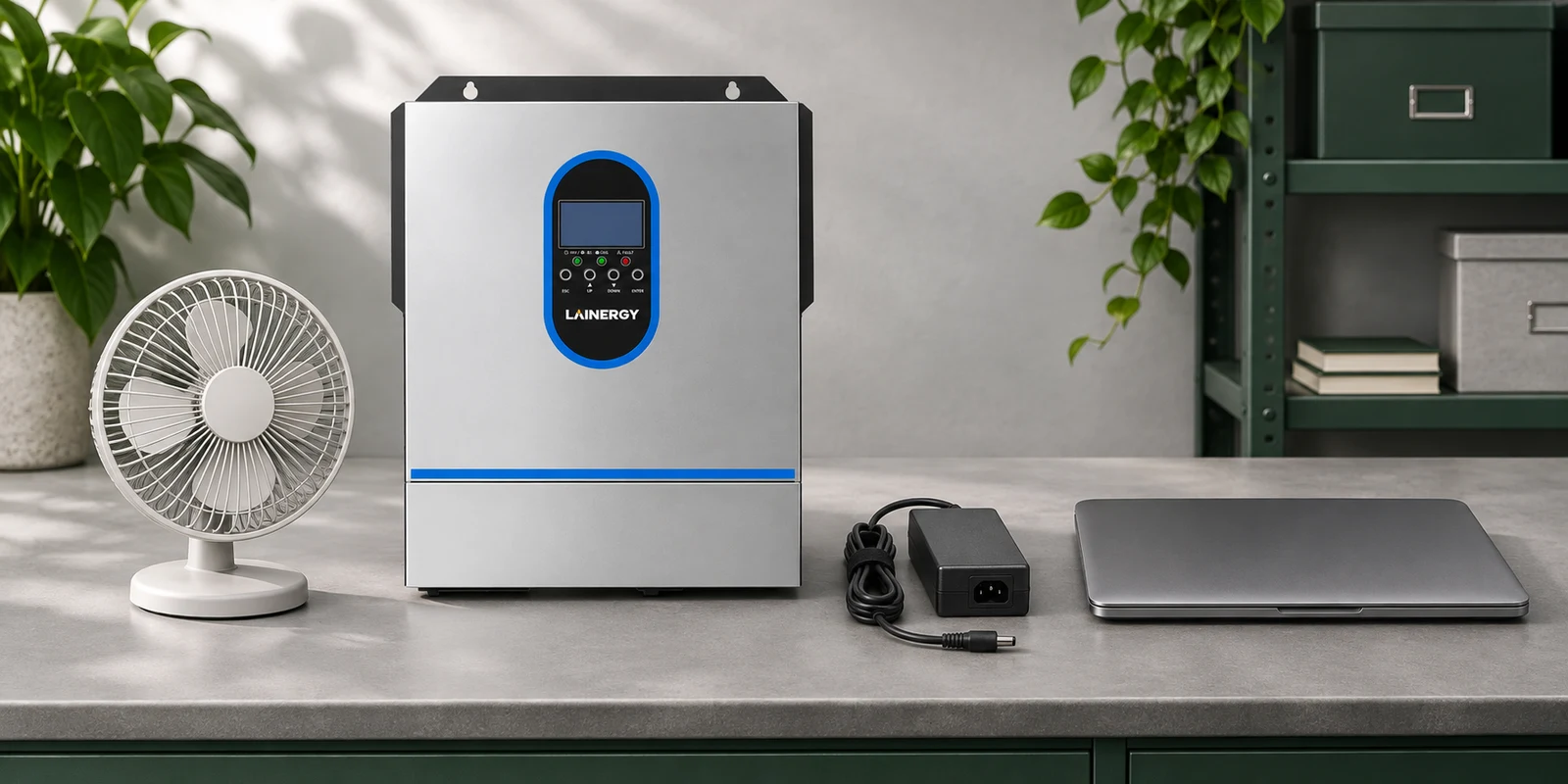
The LAINERGY WP-3.5K lists pure sine wave output, 3.5 kW rated power and a 24 V battery system. These are useful starting fields, but the purchasing specification should also identify the destination AC voltage and frequency, battery configuration and representative loads.
Where waveform distortion matters to the customer, request the stated total harmonic distortion specification and its measurement conditions. Avoid inventing a THD value from the words “pure sine wave.” Likewise, specify the operating temperature and sustained load used for an acceptance run.
A sample evaluation that answers a commercial question
Prepare a repeatable load sequence rather than demonstrating one easy appliance. Start with normal operating loads, add the largest expected startup load and record whether the system remains stable. Repeat the agreed sequence under the conditions relevant to the application.
The evaluation record should identify the inverter and battery models, firmware, settings, ambient conditions and actual loads. Note unexpected shutdowns, equipment resets or operating noise. Any electrical measurements and setup should be handled by qualified personnel using the manufacturer’s procedures.
For wholesale purchasing, this record helps define which applications sales staff can support. It also makes a replacement model easier to assess without relying on a similar enclosure or headline wattage.
Is pure sine wave always necessary?
The answer depends on the equipment and the customer’s requirements. A simple, known load may tolerate a modified waveform, while a mixed portfolio creates more compatibility questions. Compare the total support burden and approved application range as well as the purchase price.
Review LAINERGY off-grid inverters and send a list of target appliances, their startup requirements and the destination voltage through the inquiry form. Ask for a model recommendation tied to that load list and a sample evaluation scope.