Solar PV Modules
Explore the range
PV module and solar roof options for commercial installers, distribution partners and project procurement.
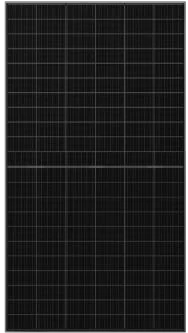
Solar PV Modules for Distributors and Project Buyers
LAINERGY supplies solar PV modules for distributors, commercial installers and project procurement teams. Our listed HJT series covers 720–745W, with module selection coordinated around the installation area, mounting arrangement and inverter specification.
Bring us your project capacity, destination and delivery requirements. We can review the module requirement alongside inverter and storage procurement, so the quotation addresses the equipment interfaces as well as the module order.
Request a solar module quotation
Explore the HJT module series
| Item | Listed specification |
|---|---|
| Series | LN132-8-720–745BHDG |
| Power range | 720–745W |
| Cell technology | HJT |
| Selection inputs | Available area, mounting design and electrical limits |
See the 720–745W HJT module for the current product overview. Request the datasheet for the precise wattage and configuration being quoted, including dimensions, weight, electrical ratings and installation requirements.
HJT and TOPCon requirements can be discussed during product selection. Compare the proposed models against the project brief instead of treating a cell-technology name as a complete specification.
Select modules around the site layout
Start with the usable installation area and the mounting design. Module dimensions influence row layouts, handling, access and the number of modules that fit around roof features. A higher power rating per module does not by itself establish the highest capacity for a particular roof.
For commercial installations, share layout drawings, available area, roof construction and relevant loading requirements. The mounting supplier and project engineer should review the actual module format and fixing arrangement together.
For a distribution order, define the installation types your customers serve. A repeatable specification, clear model identification and consistent documentation help installers select and reorder the right module.
Match the array to the inverter
Check open-circuit voltage, operating voltage, short-circuit current and operating current against the inverter’s input limits. Series connections increase voltage; parallel strings increase current. The maximum permitted PV power is only one part of the matching process.
Include the site’s lowest design temperature when checking string voltage. The final design also needs the module’s temperature coefficient, inverter MPPT range and input-current limits. These checks should use the exact module and inverter datasheets.
For coordinated procurement, browse our hybrid solar inverters and off-grid solar inverters. Supply the proposed module configuration so the electrical pairing can be reviewed before ordering.
Compare conventional modules and solar roof requirements
For a conventional PV installation, procurement needs to coordinate modules, mounting, roof access and electrical equipment. For building-integrated solar roofs, the scope also involves the roof’s construction and weather protection.
Our solar roof project support is a starting point for new-build and refurbishment enquiries. Send the roof drawings, project location and intended installation approach so the module or roof-system scope can be defined.
For PV with battery storage, also include the facility’s operating schedule and energy-use profile. Explore our commercial solar and storage support when the project requires coordinated generation and storage equipment.
Define the supply and inspection requirements
A useful purchasing brief identifies the exact model, wattage, quantity, delivery destination and required documents. Include packaging, unloading and storage requirements, together with any inspection or acceptance criteria.
For project or distribution orders, discuss serial-number traceability, flash-test records and electroluminescence inspection records as part of the agreed supply scope. Review the model-specific warranty and certification documents before finalizing procurement. Product warranty and power-performance warranty should be considered separately.
Frequently asked questions
Which module technologies and power classes are available?
The listed LN132-8-720–745BHDG series uses HJT technology and spans 720–745W. Share any TOPCon or other technology requirements so the available model and supply configuration can be reviewed.
What are the dimensions and weight of the selected module?
Request the current datasheet for the exact quoted model. Use its dimensions and weight when checking the roof layout, mounting compatibility, handling method and delivery access.
How should buyers compare HJT and TOPCon modules?
Compare actual models using electrical ratings, temperature coefficients, dimensions, warranty terms and the proposed installation. Include procurement cost and project requirements; the technology label alone does not decide the best option.
How should module current be matched to an inverter?
Compare the array’s operating and short-circuit currents with the inverter’s relevant input limits. Account for parallel strings and any applicable design allowances, using the selected equipment’s documentation.
When should bifacial modules be considered?
For a bifacial option, review rear-side exposure, mounting geometry and the surrounding surfaces with the project designer. Ask for a site-specific yield assessment rather than assuming a fixed generation gain for every installation.
Which mounting conditions and mechanical loads apply?
They depend on the module and approved mounting arrangement. Confirm fixing locations, support requirements and relevant load limits in the installation documents for the quoted model.
Which certificates can be included with a module order?
Request certificates and reports that match the proposed module and destination requirements, including applicable IEC documentation. Any additional testing or certification work should be agreed as part of the order scope.
Can buyers request flash-test and EL inspection records?
Include the required records and traceability format in the enquiry. Agree on their availability, inspection stage and acceptance criteria before confirming the supply scope.
How do product and power warranties differ?
A product warranty addresses covered product defects under its terms. A power warranty defines a specified performance commitment and conditions. Review the written terms for the exact model, including the claim process.
How are modules packed and shipped?
Confirm the packing arrangement, pallet quantities, transport method and unloading requirements for the order. Include delivery access and storage conditions when planning a project shipment.
What should I send for a wholesale or project quotation?
Send the destination, quantity or target PV capacity, preferred technology, site drawings where available and inverter details. Add the delivery schedule, documentation requirements and any solar-roof or storage scope.
Discuss your solar module requirement
Contact LAINERGY with your module specification or project brief. We can coordinate product selection, supporting information and the commercial scope for your distribution or installation programme.