Portable Energy Storage
Explore the range
Portable power stations for mobile equipment, backup essentials and distribution programmes.
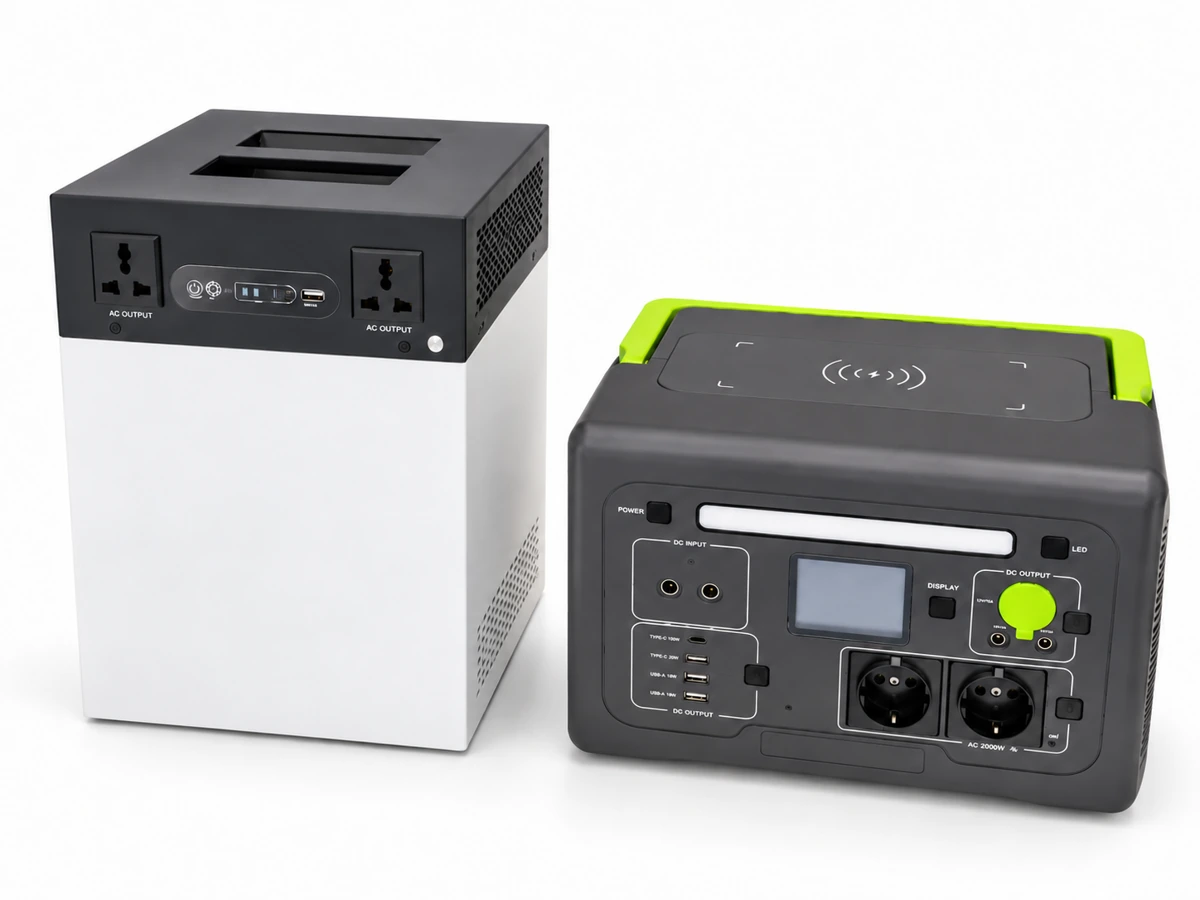
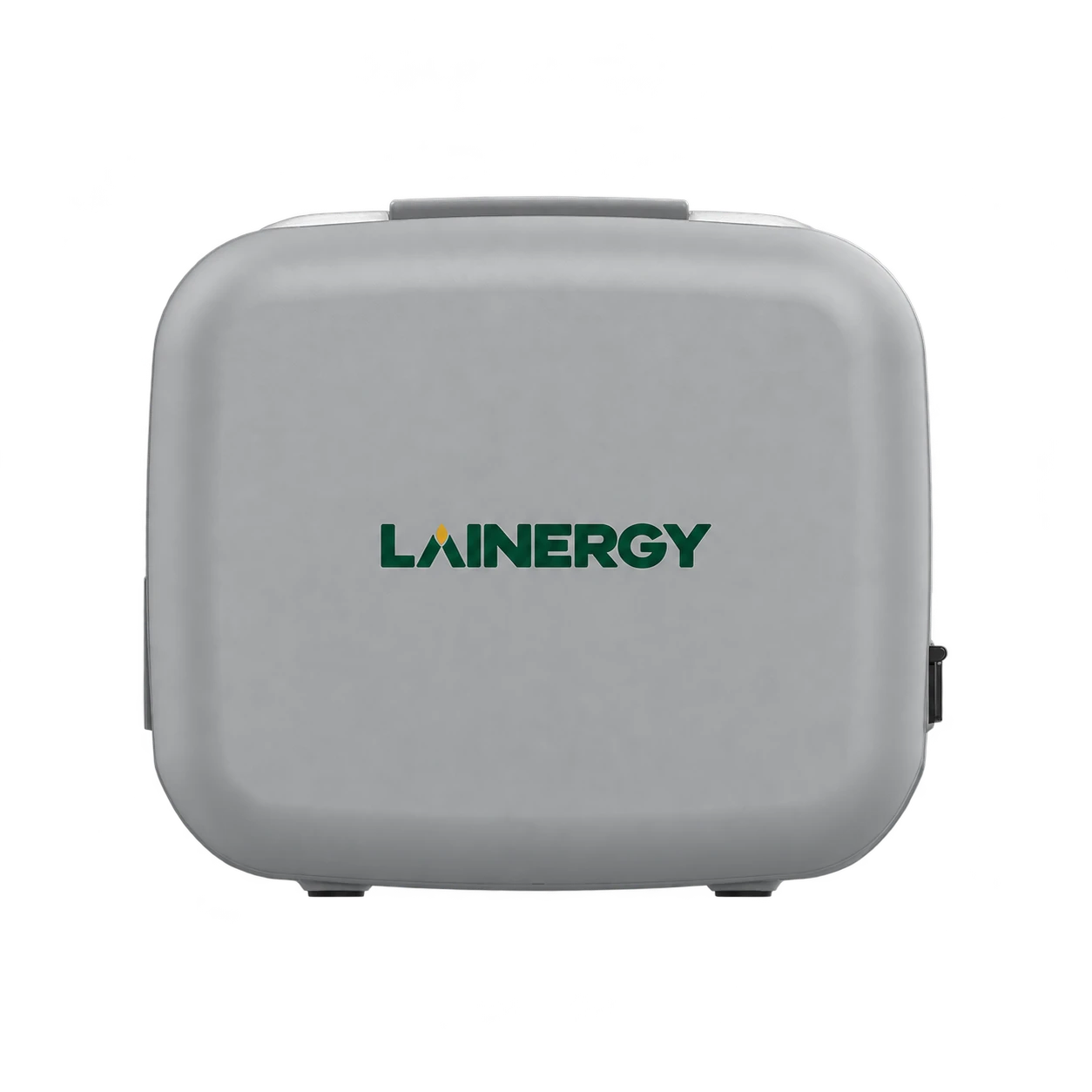
Portable Power Stations for Distributors and Equipment Suppliers
LAINERGY supplies portable energy storage for distributors, importers and professional equipment programmes. Select a product around the equipment it needs to power, the required operating time and the electrical configuration of your destination market.
The CB-1 combines 1,004Wh battery capacity with 300W rated AC output. This makes power rating and runtime separate parts of the purchase decision: a large energy capacity does not mean the unit can operate high-power appliances.
Request a portable power quotation
Review the CB-1 specification
| Specification | CB-1 |
|---|---|
| Battery energy capacity | 1,004Wh |
| Rated AC output | 300W |
| Battery chemistry | LiFePO4 |
| AC waveform | Pure sine wave |
| Listed AC voltage options | 100 / 110 / 120 / 220 / 230 / 240V, market dependent |
| Frequency | 50 / 60Hz |
| Socket options | Universal / UK / EU / China |
| Dimensions | 280 × 168 × 248mm |
| Weight | 9kg |
| Enclosure protection | IP20 |
Review the CB-1 product page and confirm the voltage, frequency and socket configuration in the order. Listed market options do not mean one unit switches freely between every configuration.
Match the equipment before estimating runtime
For AC loads, total the rated power of equipment that will run together. Then assess startup demand, especially for devices with motors or compressors. Confirm any surge capability separately rather than assuming that it exceeds the continuous output by a standard amount.
The CB-1 can be considered for small equipment and backup essentials where verified load requirements fit its 300W rating. Examples to assess include networking equipment, lighting, laptop chargers and small display systems. Their combined demand, adapters and operating behavior still need checking.
High-power heating, cooking equipment and many power tools require a different output class. Refrigerators and pumps also need startup assessment even when their normal running power appears modest.
Calculate runtime using the actual duty cycle
As a first step, divide stored energy by the connected load. For example, 1,004Wh divided by a constant 100W load gives 10.04 hours before accounting for losses. This is a theoretical calculation, not a tested CB-1 runtime.
Actual operating time depends on usable battery energy, conversion losses, the station’s own consumption, temperature and equipment behavior. Equipment that cycles on and off should be assessed by measured energy use over a representative period.
For a distribution programme, test the proposed equipment package and record the conditions. Record the load, ambient conditions and operating mode alongside the runtime result so customers can compare it with their intended use.
Configure the product for your destination
Confirm the required AC voltage, frequency and socket format together. A socket adapter does not change the output voltage or establish suitability for the destination market.
Review labels, instructions, included charging accessories and packaging as part of the quotation. For branded programmes, provide artwork and manual requirements so availability, quantity requirements and the scope of any changes can be reviewed.
The current CB-1 specification lists IP20 protection. Plan use in suitable dry conditions; the unit should not be presented as waterproof equipment for exposed outdoor use.
Agree on charging and operating functions
Charging performance can determine whether a portable power product fits a daily work cycle. Request the selected configuration’s charging methods, input limits, included charger and expected charging conditions.
Where solar charging is required, confirm that it is supported and obtain the allowed input voltage, current, power and connector details before selecting panels. Include these charging requirements in your quotation request.
Likewise, pass-through charging and UPS-style operation need separate confirmation. A product’s ability to provide AC output does not establish its transfer time, bypass rating or suitability for interruption-sensitive equipment.
Prepare a distribution order
Send the expected application, equipment load, operating duration, order quantity and destination. Include socket and voltage requirements, packaging preferences and any documents needed for import or channel approval.
Our portable power purchasing guide helps organize the brief. For ongoing cooperation, review our business partnership information.
Frequently asked questions
What is the difference between Wh and W?
Wh describes stored energy, while W describes power delivery. The CB-1 has 1,004Wh battery capacity and 300W rated AC output; the energy figure is not its output rating.
What equipment can the CB-1 power?
Consider equipment whose combined running and startup requirements are within the confirmed output limits. Provide a load list for review, particularly for compressors, motors or devices with unusual startup behavior.
How should buyers estimate runtime?
Use measured equipment demand and account for losses, internal consumption and operating conditions. A simple Wh-to-W calculation is only a starting estimate; verify the intended package through testing.
Which voltage and socket options are available?
The product page lists market-dependent voltages from 100V to 240V and Universal, UK, EU and China socket options. Confirm the precise voltage, frequency and socket combination in the quotation.
Can the selected model charge from solar panels?
Solar charging support and its input specifications require confirmation for the selected product configuration. Do not choose panels until the supported voltage, current and connector details are available.
Does it support pass-through charging or UPS operation?
These functions need separate technical confirmation. Include required transfer time, simultaneous charging and load behavior in the purchasing brief if they are important to your application.
Is it suitable for wet outdoor conditions?
The CB-1 has an IP20 enclosure. It should be used in suitable dry conditions and should not be specified as waterproof equipment for direct rain exposure.
Can buyers order samples before bulk procurement?
Ask about sample availability for the required configuration. Agree on quantity, cost, test scope and delivery arrangements before using a sample to approve a larger order.
Which branding and packaging options can be discussed?
Submit requirements for logos, labels, manuals, packaging and included accessories. The available scope and any quantity or testing implications depend on the proposed order.
What shipping and test documents are available?
Request model-specific technical and transport documentation for the destination and shipping method. Any additional conformity requirements should be included in the procurement discussion.
Build a portable power offer around real equipment needs
Share the equipment list and required operating duration for your target customers. Contact LAINERGY to discuss product matching, sample evaluation and supply requirements.